SEO for Real Estate Agents
Free. No call. Usually ready in 48 hours.
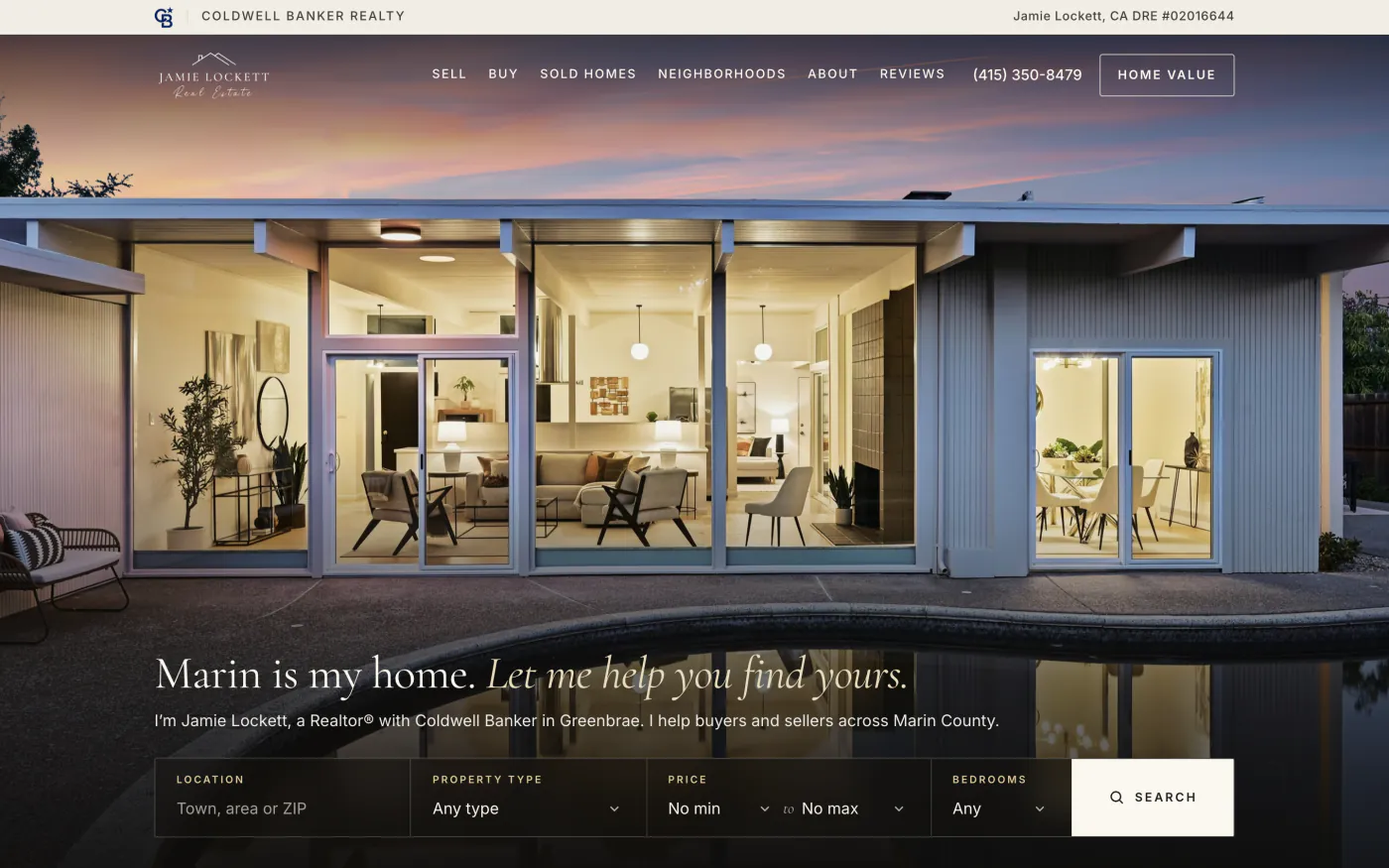
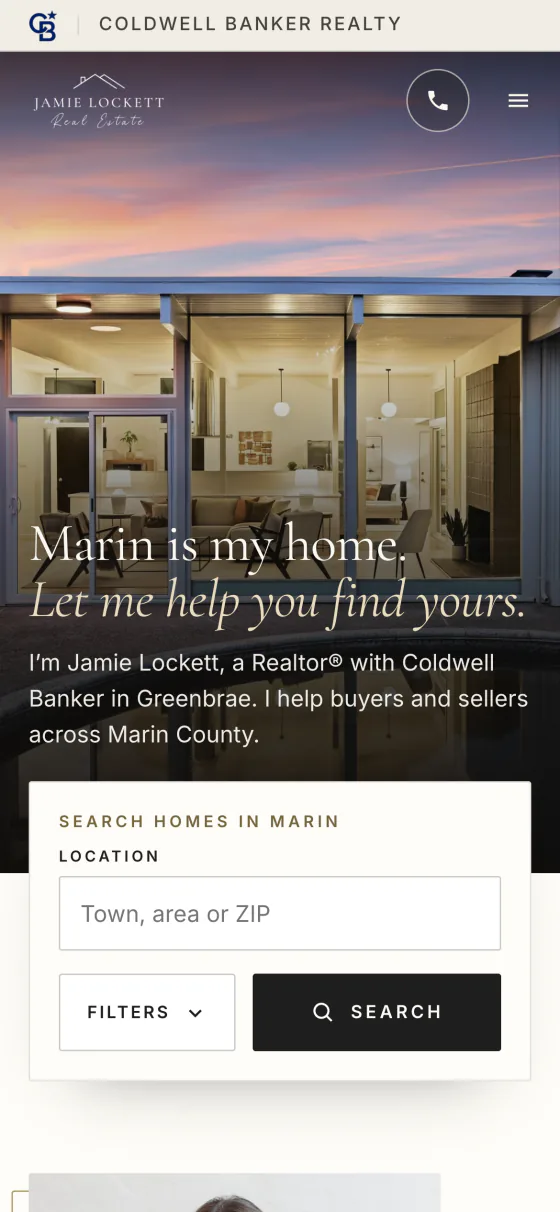
A recent build for Jamie Lockett, a real estate agent. See the project
- Winnable
- Your name, "[town] realtor"
- "sell my house [town]", "moving to [town]"
- Leave to the portals
- "homes for sale [town]"
- Link your IDX search to it. Do not chase it.
- Measured in
- Your Search Console
- And GA4, both in your name
Rasmussen Results, in Tampa, Florida, builds websites for real estate agents, teams and small brokerages anywhere in the US, in the agent's own name, then runs real estate SEO as month-to-month work quoted in writing. The portals own "homes for sale". You can own your name, "[town] realtor", the seller searches and the neighborhood guides, and you watch it happen in your own Search Console.
Tampa, Florida · Remote builds in any US state
The ledger
The searches an agent can win, and the ones that belong to the portals.
Real estate SEO fails when an agent chases the wrong searches. "Homes for sale in [town]" is the biggest query in your market and it is not available: Zillow, Realtor.com and Redfin hold it with millions of listing pages and years of links, and an IDX page on your site shows the same listings they show. The ground underneath that query is open, and it is where listing appointments come from.
"homes for sale in [town]", "[town] condos for sale"
Who holds itThe portals, with the MLS feed and years of links.
You buildNothing meant to rank. An IDX search for visitors, linked from the home page.
"realtor near me", "[town] real estate agent", "best realtor in [town]"
Who holds itThe map pack first, then agent and brokerage sites.
You buildYour Google Business Profile with steady reviews, and a home page that names your towns.
"sell my house in [town]", "how much is my house worth", "listing agent [town]"
Who holds itAgents, iBuyers and lenders, mostly with thin pages.
You buildA sell-with-me page and a home valuation page, written like your listing presentation.
"moving to [town]", "living in [neighborhood]", "[neighborhood] homes"
Who holds itBlog posts, YouTube and forum threads, rarely a local agent.
You buildNeighborhood guides from your showings: schools, commute, price bands, HOA and flood notes.
"[your name] realtor", "[your name] reviews"
Who holds itYou, unless the brokerage page or a portal profile outranks your site.
You buildA home page and a reviews page on your own domain.
The sell-with-me and valuation pages, the neighborhood guides, the reviews page and your bios come in the standard build, at $2,000. If your site needs more, you get that quote in writing ahead of your mockup, so the price is known before work starts.
Sellers
The seller side is where the commission is, and where the portals are weakest.
A buyer can start on Zillow and not need an agent until the showing. A seller cannot. Someone typing "sell my house in [town]" or "how much is my house worth" is choosing a person, and the portals answer with an automated estimate and a form that routes the seller to whichever agents advertise there. A page under your own name that answers the question properly is a fair fight, and most agents never build it.
The sell-with-me page explains how you price (recent comps, not a slogan), how you market a listing, what you charge, and what happens between signing and closing. The home valuation page takes an address and a few details and sends them to you, not to a portal. Add recent sales with the seller's permission and reviews that name the neighborhood, and a seller who found you on Google walks into the listing appointment half decided.
Neighborhoods
Neighborhood pages written like you have shown houses there.
Every IDX platform can generate a community page: a map, a listing grid and two paragraphs of filler. Google has seen that page on every other agent's site and ranks almost none of them. A neighborhood guide that ranks reads like a conversation at a showing: which elementary school the zone feeds, the commute downtown at 7:40, what a three-bedroom went for last spring, whether the HOA allows a fence, where the flood zone line runs. A portal cannot write that, because a portal has never driven the street.
Start with the three or four areas you farm, not forty. Each guide gets its own photos, a short market note you refresh each quarter, the current listings pulled in under the writing, and a link to your sell-with-me page for the owners who find it. Relocation buyers get a "moving to [town]" guide: neighborhoods by price band, taxes, insurance, the airport, and what the seasons do to inventory.
Profile
Your Google Business Profile is the one listing the portals cannot buy.
For "realtor near me" and "[town] real estate agent", Google shows a map with three profiles before any website. Zillow and Realtor.com are not in it, and Redfin appears only where it has a local office, as a brokerage like any other. Agent profiles are often unclaimed, filed under the brokerage, or set to the wrong category. The profile that ranks is yours: Real estate agent as the primary category, your own phone number, the towns you serve, photos of you and your listings instead of stock, and posts for just listed and just sold.
Reviews set the order. Fresh reviews that mention the neighborhood and the kind of sale read as the active local agent. The request goes out the week of closing, with the direct link, while the client is still glad they picked you. If the brokerage has a profile too, fine. Yours is the one your sphere searches by name, and it should link to your own domain.
IDX and brokerage
IDX, the brokerage site, and why most agent websites rank for nothing.
Three things make an agent website invisible, and they usually travel together. The first is IDX as the whole site: a feed of listings that also appears on every other IDX site and on the portals, so there is nothing on the domain Google has not already indexed somewhere stronger. IDX belongs on the site as a tool for visitors, not as the thing meant to rank.
The second is the brokerage subdomain. A page at yourname.brokerage.com ranks for the brokerage, wears the brokerage template, and stays behind when you change offices, along with the reviews and links it collected. The third is the template agent site on a monthly plan, where the vendor holds the domain and the content. The fix for all three is the same: your own domain, pages you wrote, and the brokerage page linking to you rather than the other way round. If you pay monthly for a site today, the switching guide covers how to leave without losing what you built.
Keywords
Keywords for real estate agents, grouped by who is typing them.
Most real estate keywords lists are one column of phrases with volumes beside them, which says nothing about which page should rank for each. Grouped by the person typing, the list tells you what to build.
Seller keywords
Page: sell-with-me and home valuation.
- sell my house in [town]
- how much is my house worth [town]
- listing agent [town]
- real estate agent to sell my house
Buyer keywords you can hold
Page: home page and buyer guide.
- [town] real estate agent
- realtor near me
- first time home buyer [town]
- buyer's agent [town]
Not "homes for sale", which stays with the portals.
Neighborhood keywords
Page: one guide per neighborhood, plus "moving to [town]".
- living in [neighborhood]
- [neighborhood] schools
- [neighborhood] HOA fees
- [town] vs [town]
Brand keywords
Page: home page and reviews page.
- [your name] realtor
- [your name] reviews
- [team name] real estate
- [your name] [brokerage]
The first thing a referral types.
If you also buy houses or work with investors, "we buy houses [town]" and "sell my house fast [town]" are a separate set with their own page and a rougher results page. Worth it only if that is really your business.
The service
What a real estate SEO service looks like here, month to month.
Two parts, priced differently. The website is $2,000 once (the facts box above), built in two to three weeks, and it ships with the pages listed in that box, the Business Profile set up, and Search Console and GA4 in your name. That alone fixes most of what keeps an agent invisible.
The SEO after launch is ongoing work: new neighborhood guides, a quarterly market note on each, seller content, Business Profile posts and the review cadence, technical fixes when Google changes something, and a plain readout of what moved. It is quoted in writing after I have looked at your market, billed month to month, and you can stop any month without losing a page, a review or a login, because all of it lives on your domain and in your accounts. There is no SEO price on this page because a solo agent in a two-town market and a six-agent team across a metro are not the same amount of work, and a number here would be a guess.
You read progress in your own Search Console and GA4, not in a slide I made.
Three steps, and the first one is free.
Nothing is signed before you have seen a design.
- Free homepage mockup
Send me your name and the town you farm. I design a homepage for you, and you decide after you have seen it.
- The $2,000 build
Two to three weeks: home page, sell-with-me, valuation, neighborhood guides, reviews, bios, the Business Profile, and Search Console and GA4 in your name. You own all of it.
- SEO, month to month
Quoted in writing for your market. New guides, seller content, profile posts, the review cadence and a readout of what moved. Stop any month and keep everything.
Check it yourself
How to check an agent's SEO yourself, before you pay anyone.
Five checks, about ten minutes, and the only login you need is your own Search Console.
- 01Search your own name plus "realtor" in a private window. If the brokerage page, a portal profile or Facebook outranks your site, your brand is rented.
- 02Search site:yourdomain.com. If the results are listing pages and nothing you wrote, the site has nothing of its own to rank.
- 03Run your home page through PageSpeed Insights on the mobile setting. IDX templates often fail it, and sellers search on phones.
- 04Open Search Console, Performance, last three months, and filter queries containing your town. That is your real footprint and my baseline.
- 05In Google Maps, search "realtor near me" from your farm area. The three profiles shown, and their review counts, are the target.
The price
What does the website cost?
$2,000 once: half at kickoff, half when you approve the finished site. No required monthly fee from me, and the domain, hosting and every login are in your name.
The short version
Last updated:
- Price
- $2,000one time
- Monthly fee
- None required by me. Hosting usually costs $0 within Google's free allowance; a busy site might pay Google a few dollars a month. Maintenance is optional.
- Timeline
- 2 to 3 weeks from kickoff to a live site
- First step
- A free homepage mockup, so you see the design before you decide anything
See what you own and everything included
- You own
- The domainat your own registrar, renewing to you
- The codea GitHub repository in your name
- The hostinga Firebase project in your Google account, usually $0, with any charge billed by Google to you
- Google Analytics and Search Consoleproperties under your Google account
- Your Google Business Profileyou are the owner, and I am a manager you can remove
- Every form submissiondelivered to the inbox you choose
All of it in your name from day one. I am added as a collaborator for the build and removed by you at handover, and I never hold the only copy of any login.
- What's included
- A home page built as your personal brand on your own domain, not a portal clone
- A sell-with-me page and a home valuation page that send the seller lead to you
- Neighborhood guides and a "moving to [town]" guide for the areas you farm
- A reviews page, a buyer guide, and agent or team bios
- Google Business Profile set to Real estate agent, with your review link
- Search Console and GA4 in your name from day one
- Set up on Bing too: Webmaster Tools, which reports how your pages show up in Microsoft Copilot, and Bing Places
Q&A
Real estate SEO questions agents ask before they hire anyone.
Can a real estate agent outrank Zillow?
Not for "homes for sale in [town]", and not for a long time, so do not plan around it. Zillow, Realtor.com and Redfin rank there with millions of listing pages and links from news sites across the country. An agent outranks them where they are thin: your own name, "[town] realtor" and the map pack, "sell my house in [town]", "how much is my house worth", and neighborhood guides written by someone who has sold there. Those searches produce listing appointments, and they are open.
Do IDX pages help my SEO?
On their own, no. An IDX feed shows the same listings as the MLS, the portals and every other agent site, so Google has already indexed that content from stronger domains and has no reason to rank your copy. IDX is still worth having as a tool, because a visitor who found your neighborhood guide will want to browse homes there. Keep it, pull the current listings into the pages you wrote, and let the writing do the ranking.
Should I build neighborhood pages, and how many?
Yes, for the areas you farm, and fewer than you think. Three or four real guides beat forty generated community pages, because a guide with schools, commute, price bands, HOA rules and what sold last quarter is content only a local agent can write. Add a page when you have showings and sales to write from, refresh each one a few times a year, and link each to your sell-with-me page so the owners who land on it know you list there.
Does my brokerage's website count as my SEO?
It counts for the brokerage. A profile page or subdomain on the brokerage site ranks under their domain, uses their template, and stays with them if you change offices, along with any reviews and links it collected. Your own domain is the asset that moves with you. Keep the brokerage page, have it link to your site, and put the neighborhood guides, the seller pages and the reviews where you own them.
How do reviews affect my map ranking as an agent?
They are one of the main things Google weighs for the three map spots on "realtor near me", along with your category, your distance from the searcher and how complete the profile is. Recent reviews count for more than old ones, and reviews that mention the neighborhood and the type of sale help Google match you to those searches. Ask the week of closing with the direct link, reply to every one, and make sure they land on your own profile, not only the brokerage's.
How long until an agent's page ranks?
Your name and the Business Profile usually move within weeks of a proper setup. New neighborhood guides and seller pages take months, not weeks, to settle, longer on a brand-new domain, and town-level terms like "[town] realtor" keep climbing as reviews and links build. You watch all of it in your own Search Console, which is the only place I ask you to judge the work.
Taking agents, teams and small brokerages
Send me your name and town. I will send back a homepage.
Tell me your name and the town you farm. You get a real homepage concept under your own name and your own domain before anything is signed. No call to sit through.
Or call (813) 531-8442.